
SEO for an event company earns you a place on the shortlist a buyer is already building. A corporate buyer planning an annual dinner or a product launch runs three or four searches, opens the first six results, and picks two or three companies to brief. Everything after that happens over email and a site visit. Your job in search is to be one of those six.
That changes what good looks like. Chasing 50,000 monthly visitors is the wrong target for a business where one corporate enquiry can be worth RM50,000 to RM500,000. The right target is owning the small set of commercial queries in Kuala Lumpur and the Klang Valley, and being findable at the moment a procurement lead starts looking.
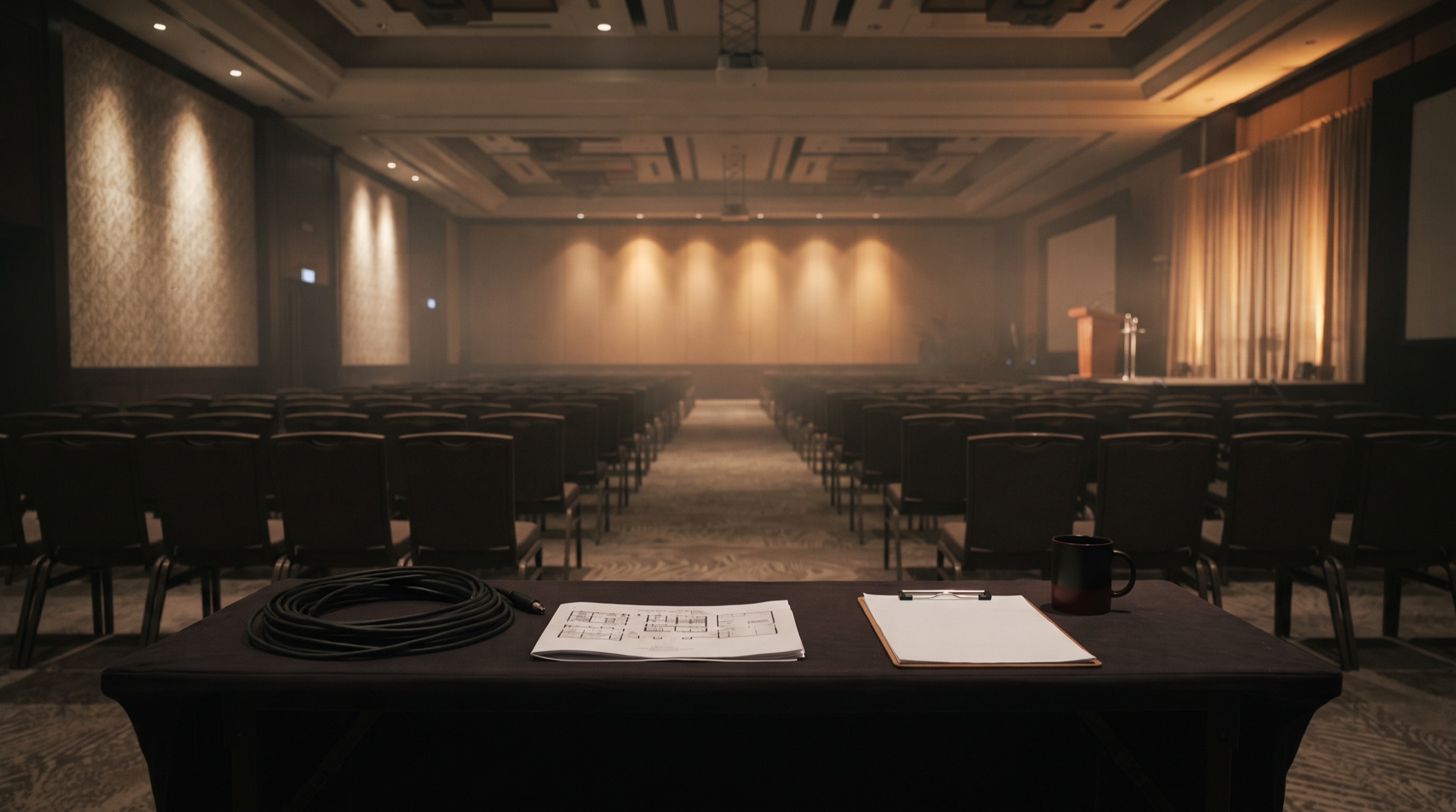
The demand behind those queries is real. Malaysia's business events sector generated RM1.81 billion in economic impact in the first half of 2026 alone, across 194 events and more than 341,000 delegates, and the Tourism Ministry projects RM34.97 billion cumulatively by 2030. Every one of those events was awarded to somebody, and some of those buyers started by searching Google.
What corporate event buyers search for
The queries split into three groups, and they need three different kinds of page. Most Malaysian event company websites answer only the first group, which is why they get found by people who already know the company name.
| Query type | Example | What the searcher wants | Page that should answer it |
|---|---|---|---|
| Category | "event management company kuala lumpur" | A shortlist of credible firms | A service page, not the homepage |
| Event type | "corporate annual dinner organiser malaysia" | Proof you have run this exact thing | A dedicated event-type page with a real case |
| Logistics | "hybrid conference AV setup kl", "roadshow booth fabrication" | To know if you can handle a specific requirement | A capability page written in plain terms |
Event-type queries are the ones worth fighting for. Somebody typing "corporate annual dinner organiser" has a budget, a date and an internal approval to spend it. Somebody typing "event company" might be a student doing coursework. The specific query converts and the broad one flatters your traffic chart.
Why event company websites lose searches they should win
Three problems account for most of it, and they compound.
The gallery problem is the most common and the easiest to underestimate. Event companies sell visually, so the site gets built as a photo showcase. Google reads text. If your Penang product launch page carries thirty images and a caption, there is nothing for the search engine to match against "product launch event company penang", and nothing for an AI assistant to quote when someone asks it the same question.
What to fix, in order
1. Give corporate and consumer buyers separate pages. Corporate and consumer event work are two different businesses, and they need two different pages. Give each its own service pages, its own language and its own enquiry form. Every fix below gets easier once this one is done.
2. Write one page for each event type you want more of. Annual dinners, product launches, conferences, exhibition stands, roadshows, town halls. Each page needs the real detail: typical guest counts, venues you have worked in, the timeline you run to, what is included and what is quoted separately. This is the substance that ranks and the substance that shortens a sales call.
3. Turn three portfolio entries into written cases. Not all of them. Three. Name the client if you have permission, state the format, the scale, the venue, the constraint you worked around and what the client got out of it. A written case is what a buyer forwards to their boss, and it gives Google and ChatGPT something to quote.
4. Compress the images and fix the loading. Event sites load slowly because galleries go up at full camera resolution and never get compressed. Serve modern formats, size images properly and lazy-load anything below the fold. This is a website build issue more often than an SEO one.
5. Claim and complete the Google Business Profile. Google says local ranking runs on relevance, distance and prominence, and that complete, accurate profiles are more likely to surface in local results. For an event company where clients want a face-to-face briefing before signing, showing up in the local pack for "event company near me" is not a vanity position.
One thing to avoid: do not add Event schema markup to your portfolio pages. Google's Event structured data describes events people can attend, with a real date and physical location. Marking up work you delivered two years ago misrepresents the page, and structured data has to be a true representation of what is on it. Use it only for events you are selling tickets to.
How long SEO takes, and the event seasons to plan around
Technical fixes and profile work can show inside 30 to 60 days. Event-type pages generally start ranking between month three and month six, which runs into the second constraint: seasonality. Malaysian corporate event planning for the Q4 annual dinner season starts around June or July, and Raya and Chinese New Year activations get briefed months ahead. A page that goes live in October for a December season is a page built for next year.
So the honest sequence is to publish ahead of the buying window rather than inside it. That is the same compounding logic we cover in how SEO and GEO work together and in our broader SEO approach.
Frequently asked questions
How much does SEO cost for an event company in Malaysia?
Retainers for a focused vertical programme like this typically run lower than a national e-commerce campaign, because the keyword set is smaller and geographically concentrated. Our SEO engagements start around RM8,000 a month, and a single-city event company with a clean site sits at the lower end of that. For how it compares across disciplines, see our guide to Malaysian agency pricing.
Is SEO worth it when most event work comes from referral?
Referral and search do different jobs. Referral gets you into the conversation with people who already trust someone who trusts you. Search gets you into conversations you would never have heard about. The second one is where new sectors and larger clients come from, and it keeps working when a key referrer changes jobs.
Should we target Kuala Lumpur, or all of Malaysia?
Start with the area you can service properly, then expand. A Klang Valley event company that ranks for KL and Selangor terms will beat one that spreads thin content across all thirteen states. Once the home market is held, add a page for each city you have real work in.
Do we need a blog?
Not in the usual sense. You need the event-type pages and the written cases first, because those are what buyers search for. Useful writing after that looks like planning guides, budget breakdowns and venue comparisons, which is content built to do a job rather than a posting schedule.
Start with a site audit
If you run an event company and search is not bringing you enquiries, the fastest way to find out why is to look at the site rather than the strategy. Get in touch and we will send a technical and content audit of your current pages before the first meeting, so the conversation starts with what is broken.