
SEO for a retail brand in Malaysia decides whether a shopper finds your store, your product or a marketplace reseller first. A shopper looking for a stand fan in Petaling Jaya types what they want, sees who has it nearby and checks whether it is in stock. If your store page, your Google listing and your product page do not answer those three questions, a Shopee seller or the mall's own directory will answer them for you.
That is what separates retail from pure e-commerce. An online store only has to win the product search. A retailer with outlets in malls and shoplots has to win the brand search, the location search and the product search, and each one needs a different page.
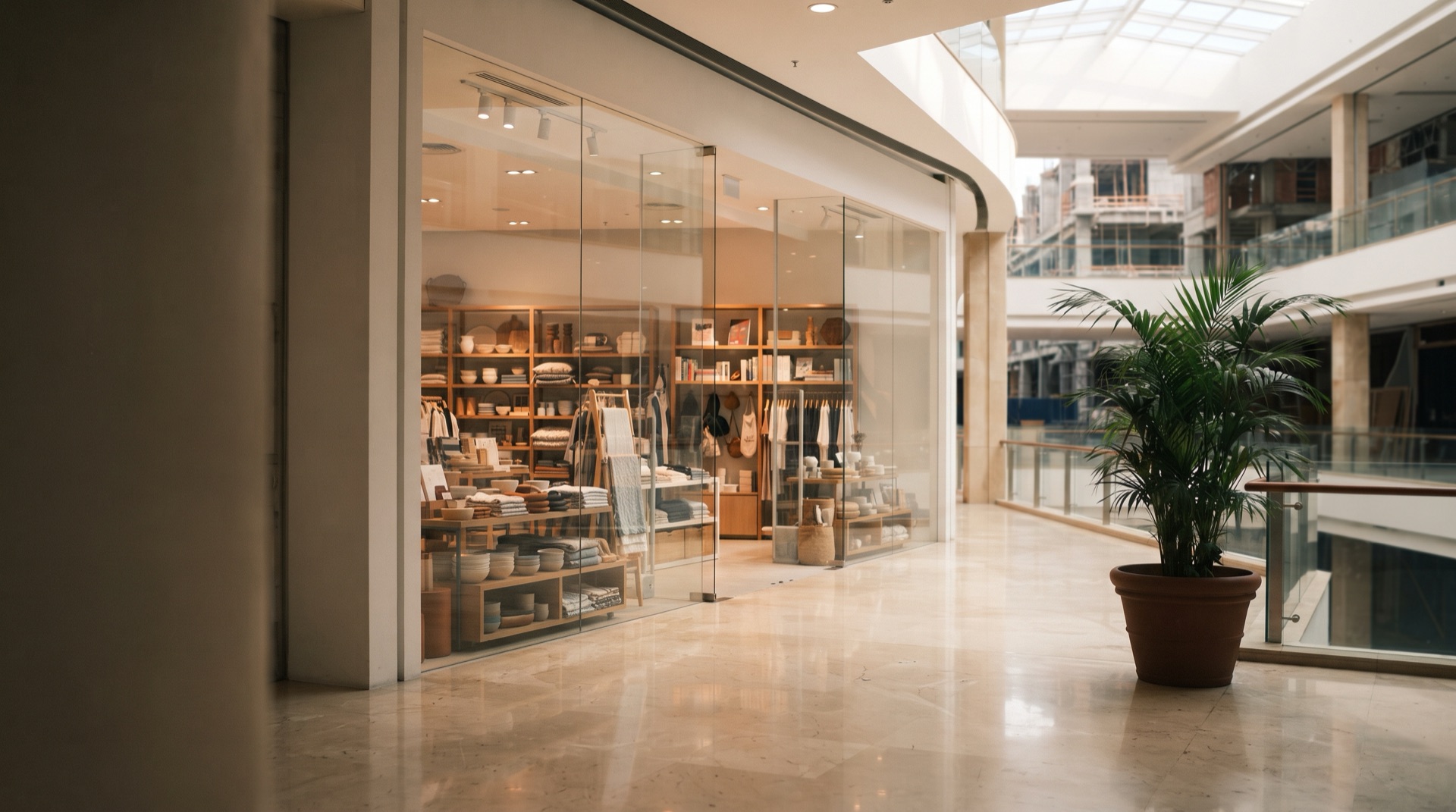
Malaysian retail trade reached RM71.3 billion in July 2026, up 6.4% on the year, and the online retail sales index grew 7.4% in the same month, according to Department of Statistics Malaysia figures. Plenty of that spend still happens at a counter in a mall, and more of it starts with a search on a phone.
What do retail shoppers in Malaysia search for?
Retail queries fall into three groups, and most Malaysian retail sites only answer the first.
| Search moment | Example query | What the shopper wants | Page that should answer it |
|---|---|---|---|
| Brand | "[your brand] mid valley" | Your outlet, its hours, how to get there | A dedicated store page for that outlet |
| Local | "furniture shop near me", "shoe store sunway pyramid" | A shortlist of stores they can reach today | Your Google Business Profile and store page |
| Product | "air fryer 5L in stock klang" | The item, the price and where to pick it up | A product page plus your in-store inventory on Google |
The product search is where retailers leak the most. The shopper has already decided to buy. They only need to know who has it, and if your own site cannot show stock at a nearby outlet, the marketplace listing that shows a price and a delivery date wins the click.
Where do retail brands lose the search?
The same three problems show up on most retail sites. The store locator is one JavaScript map with every outlet inside it, so there is no page for Google to rank when someone searches your brand and a mall name. The Business Profiles were set up by different branch managers over the years, with different names and missing hours. And nobody has connected the stock system to Google, so the shop shelf is invisible to search.
What should a retail brand fix first?
1. Build one crawlable page for every outlet. Each store gets its own URL with the mall name, floor, lot number, opening hours, parking notes and the phone number that rings at that counter. Write the mall the way shoppers type it: "1 Utama", "Pavilion KL", "IOI City Mall". This is the page that ranks for your brand plus a location, and it is the page your Business Profile should link to. Our local SEO guide covers how to make these pages worth indexing rather than thin copies of each other.
2. Clean up one Business Profile per outlet. Google ranks local results on relevance, distance and prominence. Every outlet needs its own verified profile, named exactly as the signage reads, with the right category and current hours. Google's profile guidelines do not allow keywords stuffed into the business name, and listings that break the rule can be suspended right before your festive peak.
3. Put your shelf on Google. Malaysia is one of the markets where Google supports free local listings and local inventory ads for retailers with physical stores. Once your stock feed is connected through Merchant Center, a product can show as available at a named outlet, at no cost for the free listing. For a chain whose POS system already tracks stock by outlet, this is usually the fastest win on this list.
4. Give your own product pages a reason to beat the marketplace. If your product page carries the same one-line description as your Shopee listing, the marketplace wins on price, reviews and delivery date. Add what only you can say: full specs, size guides, which outlets carry it and whether a shopper can try it before buying. The e-commerce SEO guide goes deeper on category and product pages.
5. Publish ahead of the festive calendar. Raya, Chinese New Year, Deepavali, 11.11 and year-end sales drive the biggest retail weeks in Malaysia. A new page generally takes months to rank, so gift guides and seasonal category pages need to go live one season early and then be updated every year on the same URL.
How long does retail SEO take, and what does it cost?
Business Profile cleanup and store pages can move local rankings inside 30 to 60 days. Local inventory listings show once the feed is approved. Product and category pages usually take three to six months to climb, which is why the festive pages have to start early.
Our SEO engagements start around RM8,000 a month. A chain with five to 15 outlets and one product catalogue sits at the lower end, and a national chain with hundreds of SKUs across dozens of locations sits higher. For how that compares with other disciplines, see our guide to Malaysian agency pricing.
Frequently asked questions
Is SEO worth it if we already sell on Shopee and Lazada?
Yes. A marketplace listing does not send anyone to your outlet, and it does not give you the shopper's data. Search is how a shopper who wants to touch the product before paying finds your store.
Do we need a separate page for every outlet?
Yes, if each outlet is a real store with its own address and hours. One page per outlet is what lets you rank for your brand plus each mall name. The pages need real local detail, or Google treats them as near-duplicates.
Should we write in Bahasa Malaysia and Chinese as well?
If your shoppers search in those languages, yes. Start with store pages and top category pages, and have a native speaker write them rather than running English copy through a translator.
Does AI search change any of this?
AI assistants pull from the same signals: consistent store details, reviews and clear product information. A retailer with clean Business Profiles and specific product pages is easier for ChatGPT or Google's AI Overviews to recommend. We cover how that works in SEO versus GEO.
Start with a store-by-store audit
If you run a retail brand and shoppers are finding marketplace sellers before they find your outlets, get in touch. We will audit your store pages, Business Profiles and product pages before the first meeting, so the conversation starts with what shoppers cannot find today.