
A creative agency in Malaysia takes a business problem, such as slow sales or a forgettable brand, and turns it into campaigns people notice and remember. It finds the idea, writes the words, designs the visuals and produces the films and ads that carry them to your customers. How good that work gets depends heavily on what you hand over on day one, and that document is the creative brief.
A brief that seems clear to you may not seem clear to the agency reading it. In the BetterBriefs study of more than 1,700 marketers and agency staff, 80% of marketers said they write good briefs and 10% of creative agencies agreed. This guide covers what a creative agency makes, what a usable brief contains, what changes in Malaysia and who owns the work when the job ends. If you are still deciding which kind of agency you need, start with our comparison of advertising and digital marketing agencies.
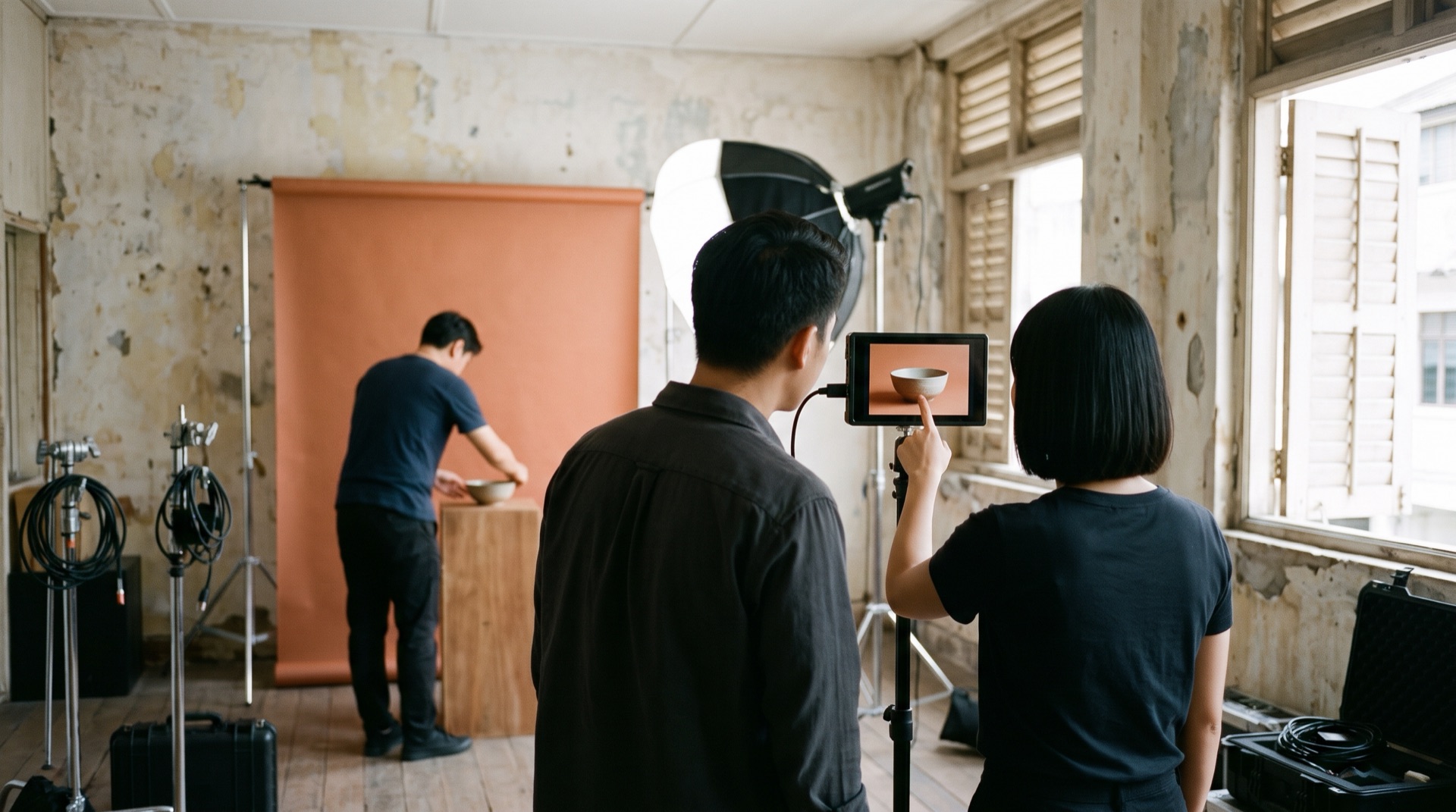
What does a creative agency in Malaysia do?
It does three jobs in order. It finds the one thought worth saying to your customer, turns that thought into words and visuals, and then produces the finished pieces for each place they will run.
The label has no fixed meaning, so two agencies with the same title can sell very different things. One may be a film house with a strategist on call and another may be a design studio that outsources every shoot. Sort them by what you receive.
| What you buy | What you receive | Who makes it | What to check before you pay |
|---|---|---|---|
| Campaign idea | One central thought, shown in sample ads | Strategist, copywriter, art director | Can you say it in one sentence, and could a competitor run it unchanged? |
| Key visual and copy | Master image, headline, body copy and resized versions | Art director, designer, copywriter | Does it still read on a phone feed and on a billboard? |
| Film and video | Script, storyboard, shoot and edits in each length | Producer, director, editor | Who keeps the raw footage, and how long can you use the talent? |
| Social ad sets | Batches of hooks, statics and video cuts | Copywriter, designer, editor | Can your media buyer test each version separately? |
| Monthly content | Photos, Reels and carousels on a calendar | Content lead, videographer, editor | Does each month build on what last month taught you? |
Two things usually sit outside the scope. Media buying often goes to a separate team, so ask who will run the work once it is made. Brand foundations, such as positioning and identity, may also be missing. An agency with no strategy to work from will guess at one, and our guide to brand strategy and identity guidelines shows what it should be given instead.
Does creative quality really change sales?
Yes, and the best-known evidence comes from a media measurement firm, which has no creative work to sell. Nielsen's analysis of nearly 500 FMCG campaigns from 2016 and early 2017 found good creative was still the most important element behind sales lift. Weak creative produced weak lift, whichever medium carried it. The same article puts the effect of media on sales at 36%, up from 15% over 11 years, so buying well matters too.
Treat that as evidence that creative work matters a lot, and do not plan your budget around any exact percentage. The study is nearly a decade old, it covers packaged goods and it says nothing specific about Malaysia. We also found no published Malaysian equivalent. Our piece on brand strategy and performance ads shows how we write brand rules into ad briefs, which is where this research becomes useful day to day.
Why do so many creative briefs go wrong?
Most marketers believe their brief is clear, and agencies rarely do. The same BetterBriefs study measured the gap on specifics.
| Statement about the brief | Marketers who agree | Creative agencies who agree |
|---|---|---|
| Marketers write good briefs | 80% | 10% |
| Briefs give clear strategic direction | 78% | 5% |
| Briefs use clear, concise language | 83% | 7% |
Respondents estimated that 33% of marketing budgets go to waste through poor briefs and misdirected work. Treat that number as an opinion, since it comes from people guessing at their own waste. The study's global report has a more telling line: 60% of marketers use the creative process to clarify their own strategy. In practice the agency is being paid to find out what the client wants, one rejected concept at a time. The data dates from 2021 and is global, with no Malaysian cut that we could find.
The pattern we see is familiar. A brief lists every product benefit because nobody wanted to choose, three departments add a line each, and the document arrives by email with a deadline. The agency returns three routes, each answering a different question, and the meeting turns into a debate about taste.
What should a creative brief include?
A good brief fits on one page and answers eight questions. If an answer takes more than a few lines, you probably have not finished deciding it.
Field 8 is the one clients skip, usually to keep the agency from quoting up to the budget. It costs them more than it saves. Without a number, the agency has to guess whether you can afford a two-day shoot or a phone and an editor, and the idea it brings may be one you cannot pay to make.
Here is how the fields change with a made-up example: a family chilli sauce maker in Ipoh that has sold mainly through wholesalers and now wants supermarket shoppers.
| Field | Vague line | Usable line |
|---|---|---|
| Business problem | Grow brand awareness | Get supermarket sales from 10% to 25% of revenue within 12 months |
| Audience | Malaysians aged 25 to 45 | People under 40 who cook at home on weeknights and buy sambal in jars |
| What they believe | They do not know us | They think our sauce is for restaurants, because that is where they have tasted it |
| One thing to say | Authentic, quality, tradition and convenience | The sambal your favourite Ipoh stall already uses, in a jar you can buy |
| What to make | A viral video | Six vertical video ads, three statics, one shelf wobbler, in BM, English and Mandarin |
The right-hand column gives an art director a specific idea to build on and challenge. The left-hand column could describe almost any sauce in the aisle.
What does a creative brief need to cover in Malaysia?
Three things work differently in Malaysia, and each one is cheap to raise on day one and expensive to raise after the shoot.
Languages. Name each language, who writes it and who approves it on your side. A line written in English and translated afterwards often reads like a translation, so ask for BM and Mandarin writers at the idea stage. If nobody on your team can judge the Mandarin, say so before the first round.
The festive calendar. Your dates decide how much time the agency has to produce the work, so put them in the brief. In the 2027 holiday list circulated by the Federation of Malaysian Manufacturers, Chinese New Year falls on 6 February, Ramadan is expected to begin on 8 February and Hari Raya Puasa is expected on 10 March, with the Islamic dates subject to confirmation. A brand that runs both festive campaigns has two days between them in market, which leaves a shoot in January very little room. Those briefs should already be out.
Regulated claims. Some claims need clearing before they can run at all. Malaysia's Ministry of Health says ads for registered supplements, over-the-counter and traditional products need approval from the Medicine Advertisements Board. Cosmetic ads do not, but they must follow the cosmetic advertising guideline. Every category also sits under the Malaysian Code of Advertising Practice. Tell the agency at the brief stage, build approval time into the schedule and have your own regulatory adviser check what applies to your product.
How many rounds of creative revisions should you expect?
Plan for fewer rounds than the industry average, because the average wastes time and money. The BetterIdeas Project, with 1,034 respondents across 54 countries, found it typically takes five rounds of creative development to reach a signed-off idea. IPA research in the UK in 2007 recorded three, though the two samples differ.
The same study points to the cause. Personal opinion has a big influence on decisions, according to 89% of agencies and 84% of marketers. Only 15% of marketers and 23% of agencies said briefs are always used when ideas get evaluated.
Three habits bring the number down. Name one decider in the brief and let everyone else feed that person rather than the agency. Judge each route against the brief out loud, field by field, before anyone says whether they like it. Then give feedback as the problem to solve: "people will not see the price in the first three seconds" helps an editor far more than "make it pop". Write the number of included rounds into the quote as well, because extra rounds are where project budgets tend to leak.
Who owns the creative work in Malaysia?
By default the client often owns commissioned work, but the contract can change that, and the default may not cover third-party items such as licensed music or stock images. Under section 26(2) of the Copyright Act 1987, copyright in a commissioned work is deemed transferred to the person who commissioned it, subject to any agreement that excludes or limits the transfer. Agency terms often contain exactly that kind of clause, so read them.
The law also leaves practical questions open that your contract has to settle. Stock images, licensed music and on-screen talent usually come with their own terms, covering how long and where you may use them. A film you own can still become unusable when its music licence expires.
Before you sign, get four answers in writing. Who holds the final files? Who holds the raw footage and the editable design files? How long, and in which countries, are the talent and music cleared? What happens to all of it if you change agencies? We are not your lawyers, so ask yours to read the clause on anything large.
How much does a creative agency cost in Malaysia?
We could not find a published survey of Malaysian creative fees, so these are the bands from our own published cost guides, based on the proposals and quotes we see.
| Type of work | Typical range | How it is usually charged |
|---|---|---|
| Brand identity | RM15,000 to RM80,000 | Project fee |
| One discipline done properly | RM5,000 to RM12,000 a month | Retainer |
| Social content from a full agency | RM6,000 to RM25,000+ a month | Retainer |
| Integrated team, one brief | RM20,000 to RM40,000+ a month | Retainer |
Campaign films vary too much for a fair range, because one day with a small crew and a week with cast, locations and post-production are different purchases. Ask for the quote in two parts: the agency's fee for thinking and managing, and the production cost for crew, talent, locations and editing. That split shows you where the money goes and what can flex. Our marketing agency cost guide puts these numbers next to in-house hiring.
How do you choose a creative agency in Malaysia?
Ask to see the brief behind their best work, along with what happened after it ran. A showreel tells you the agency can make something attractive, and an award tells you a jury liked it. Neither tells you whether anyone bought more.
Then give each shortlisted agency your one-page brief and ask what they would change. A good agency will challenge it, usually on the audience or the one thing to say. An agency that praises your brief and moves straight to fees has not tested it, so expect the gaps to surface later as extra feedback rounds.
Finally, ask who will run the work after it is made. Most of the waste we see sits at that handover, when a campaign idea reaches a media buyer who never saw the brief and cuts it into something else. Put both teams in the first meeting, or hire one team that covers both.
Frequently asked questions
What is the difference between a creative agency and an advertising agency?
The two overlap heavily in Malaysia. An advertising agency usually builds campaigns for paid media, while a creative agency may also take on brand work, content and design with no media attached. Check the actual outputs and team, since the name will not tell you.
How long should a creative brief be?
One page, two at most. Attach research and past work separately, so the agency can read the brief in five minutes and go deeper when it needs to.
Who should write the creative brief, the client or the agency?
You write the first draft, because the business facts and the decision to focus are yours. Then walk the agency through it in person and let them question it. An agency's strategist will often rewrite it into an internal brief for the creatives, and you should read and approve that version too.
Do I need a brand strategy before I hire a creative agency?
You need the short version: who you serve, what you stand for and how you differ from the alternatives. A brand with none of that will pay the agency to work it out during the concept rounds. Our brand strategy team can write that foundation, or a one-page version may be enough if you already know the answers.
Should I tell a creative agency my budget?
Yes, every time. The budget decides whether the idea is a film, a shoot day or a series of edits from footage you already own. You will get better ideas, and more honest quotes, when the agency knows the real number.
Start with your creative brief
Start by filling in the eight fields for your next campaign. The gaps will show you what to decide before you pay anyone. If you want a team to take it from there, our brand strategy and social and content teams work from one brief, or you can talk to us and bring the page with you.